

Menu
Bone grafting is a safe and effective procedure that restores lost jawbone, creating a strong foundation for dental implants or improving overall oral health.
When bone is lost due to tooth loss, gum disease, or injury, it can affect your ability to get implants and even change your facial structure. A bone graft rebuilds and strengthens the jaw, helping preserve your smile for the future.
The bone graft is closely related to the treatment of dental implants. Just like natural teeth, implants must be fully encased in bone to allow strength and longevity.
This is why it is important to repair or replace the jaw bone that will receive a dental implant.

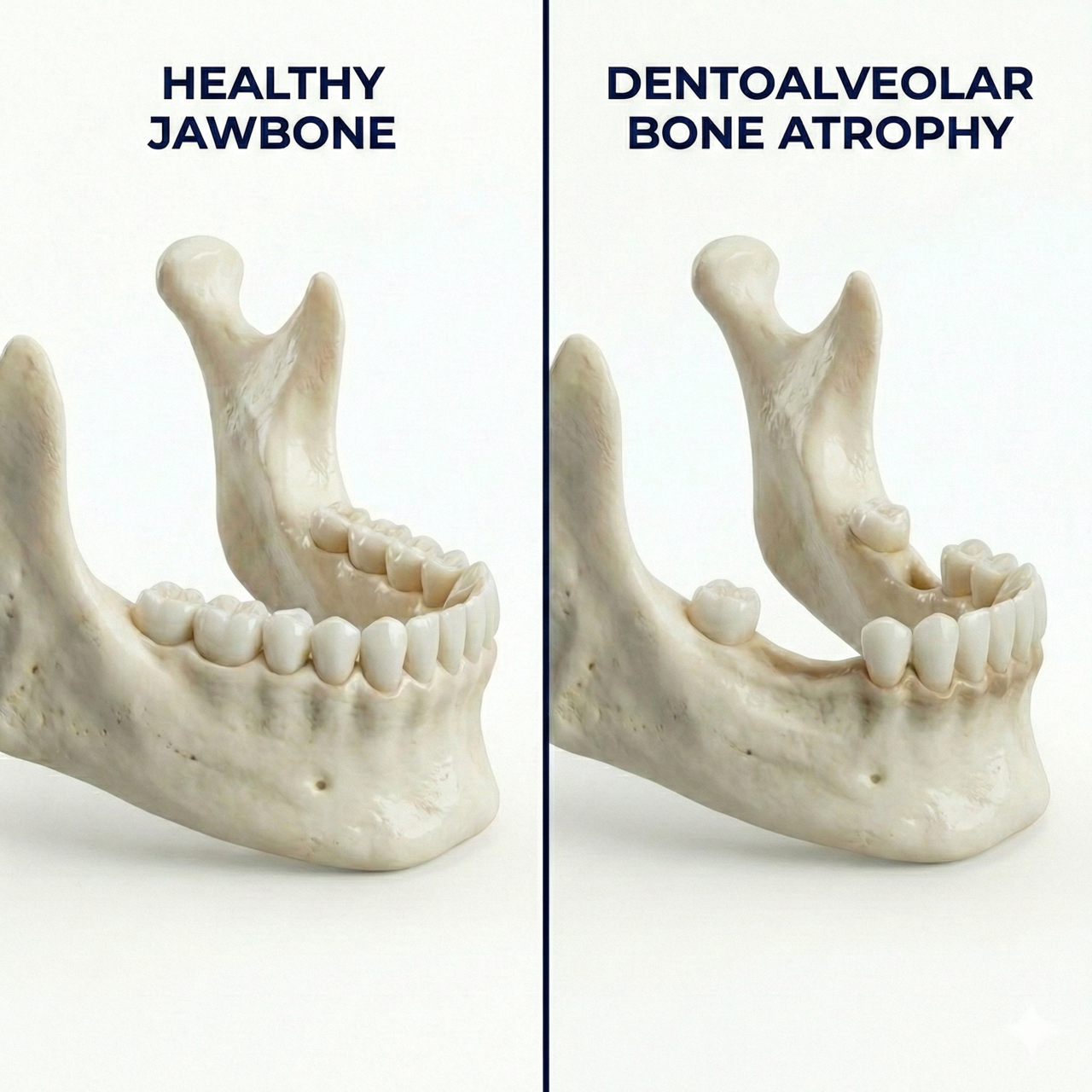
Bone loss in the jaw can lead to:

Difficulty Getting Dental Implants – Not enough bone means implants can’t properly anchor.
Facial Changes – Jawbone shrinkage can cause a sunken or aged appearance.
Loose or Shifting Teeth – A weak jawbone can’t fully support teeth.
Increased Risk of Further Tooth Loss – Bone loss weakens the support structure for surrounding teeth.
A consultation and imaging help determine whether bone grafting is recommended as part of your treatment plan.

We assess your jawbone health using X-rays or CBCT scans.

The natural bone is sculpted to receive the grafting materials. Your own bone tissue can be used for the graft but other bone substitutes are commonly used for this procedure.
After a few months, your natural bone will grow and connect with the grafted bone portion. New tissue will grow and the bone will be ready to receive a dental implant.
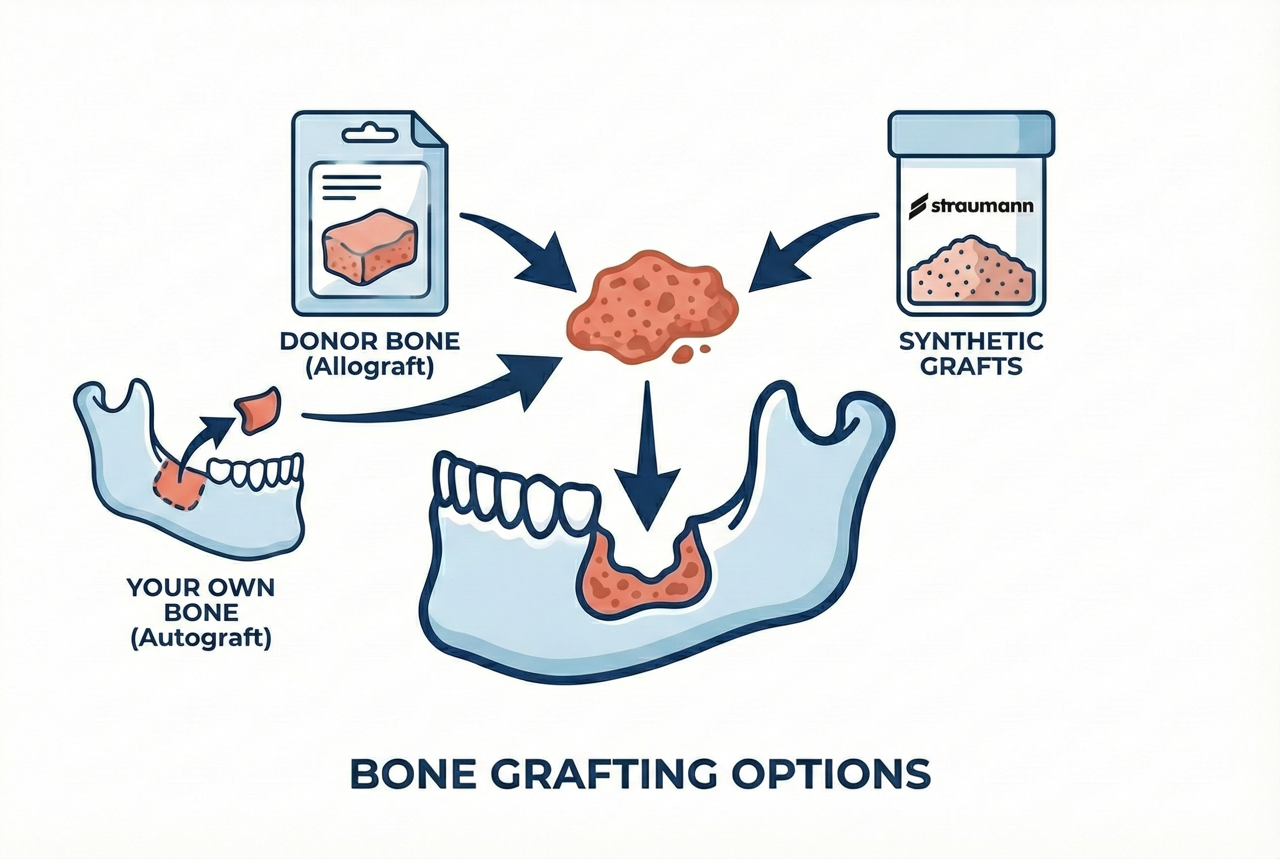
We use safe, proven grafting materials designed to encourage new bone growth:
Your own bone (autograft) – Often taken from a nearby area in the mouth.
Donor bone (allograft) – Carefully processed and widely used in modern dental grafting.
Synthetic grafts – Advanced materials such as Straumann grafting products that promote predictable healing.
Your surgeon will explain which option best suits your needs, your anatomy, and your long-term treatment goals.
Bone grafting may be performed at different stages depending on your situation:
At the same time as tooth extraction – Helps preserve bone immediately after a tooth is removed.
Before implant placement – When bone loss has already occurred and extra support is needed.
During implant placement – In cases where only a minor graft is required.
Your surgeon will outline the recommended timeline so you understand each step before treatment begins.
Bone grafting is a routine procedure performed with your comfort in mind. Local anesthesia or sedation is used to ensure a comfortable experience, and most patients report only mild, manageable soreness afterward.
We provide all necessary aftercare instructions to support smooth healing.
Bone grafting may be performed at different stages depending on your situation:
At the same time as tooth extraction – Helps preserve bone immediately after a tooth is removed.
Before implant placement – When bone loss has already occurred and extra support is needed.
During implant placement – In cases where only a minor graft is required.
Your surgeon will outline the recommended timeline so you understand each step before treatment begins.
Bone grafting is a routine procedure performed with your comfort in mind. Local anesthesia or sedation is used to ensure a comfortable experience, and most patients report only mild, manageable soreness afterward. We provide all necessary aftercare instructions to support smooth healing.

Healing varies based on graft size and location, but most patients can expect:
Regular follow-ups ensure proper healing and readiness for the next stage of treatment.
If you’ve experienced bone loss or are considering dental implants, we’re here to guide you through the process. Schedule a consultation today to learn how bone grafting can strengthen your jaw and support long-term oral health.


